If science keeps revising its explanations, how can we know whether today’s scientific theories are actually “true”?
What is the difference between a scientific hypothesis and a scientific theory—and when should we trust either one?
In science, which usually comes first: an idea that scientists want to test, or an experiment that leads to a new idea?
Could a living human being, in principle, be completely explained as an extremely complicated physical and chemical machine?
When scientists classify animals and plants into different groups, are they discovering categories that already exist in nature, or creating categories that are useful for humans?
Are things like atoms, elements, and electrons truly “real,” even though we cannot directly see them, or are they simply useful models for explaining observations?
Are we actually living as ourselves, or simply playing the roles the world has assigned us?
I began asking myself this question years ago after I finished reading the book Sophie’s World. I wondered how much of our identities is shaped by family, society, and knowledge, in other words, past experiences. I treated every person in this world as dot with properties, and infinite many links are bounded in between, forming relationship and forming flow of knowledge.
I founded Because of the Stars to bring together people who share a curiosity about the world and bridge connection between natural sciences we learned and philosophy. In the club, I hope we can question what we take for granted, challenge one another's ideas, and discover our own perspectives.
To me, philosophy isn't about finding a single correct way to live. It's about having the courage to ask what genuinely matters to us.
— Steven Tian, Founder
 Steven
 Michael
 Cervine
 Jacky
 Zephyr
 Ethan
 Yin
 Emma
 Tony
 Paul
 Richard
 Cole
 Baran
 Willam
 Samuel
 The Inspiration of Star Trails: A Journey from Myth to Science
 Gene Is DNA
 Origin of Science and Science as a Religion
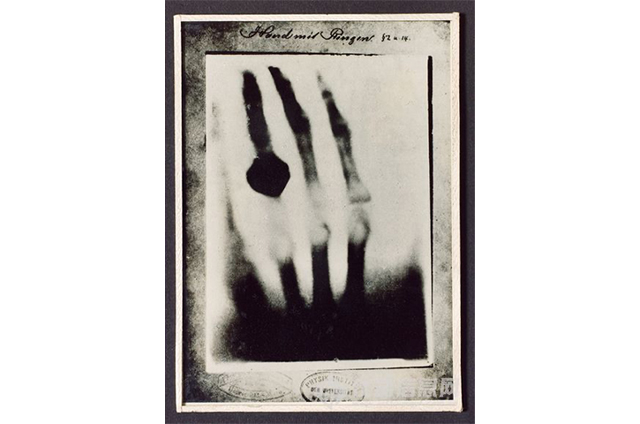 Physics Meets Medicine
 Coming Soon!
 Coming Soon!
 Coming Soon!
